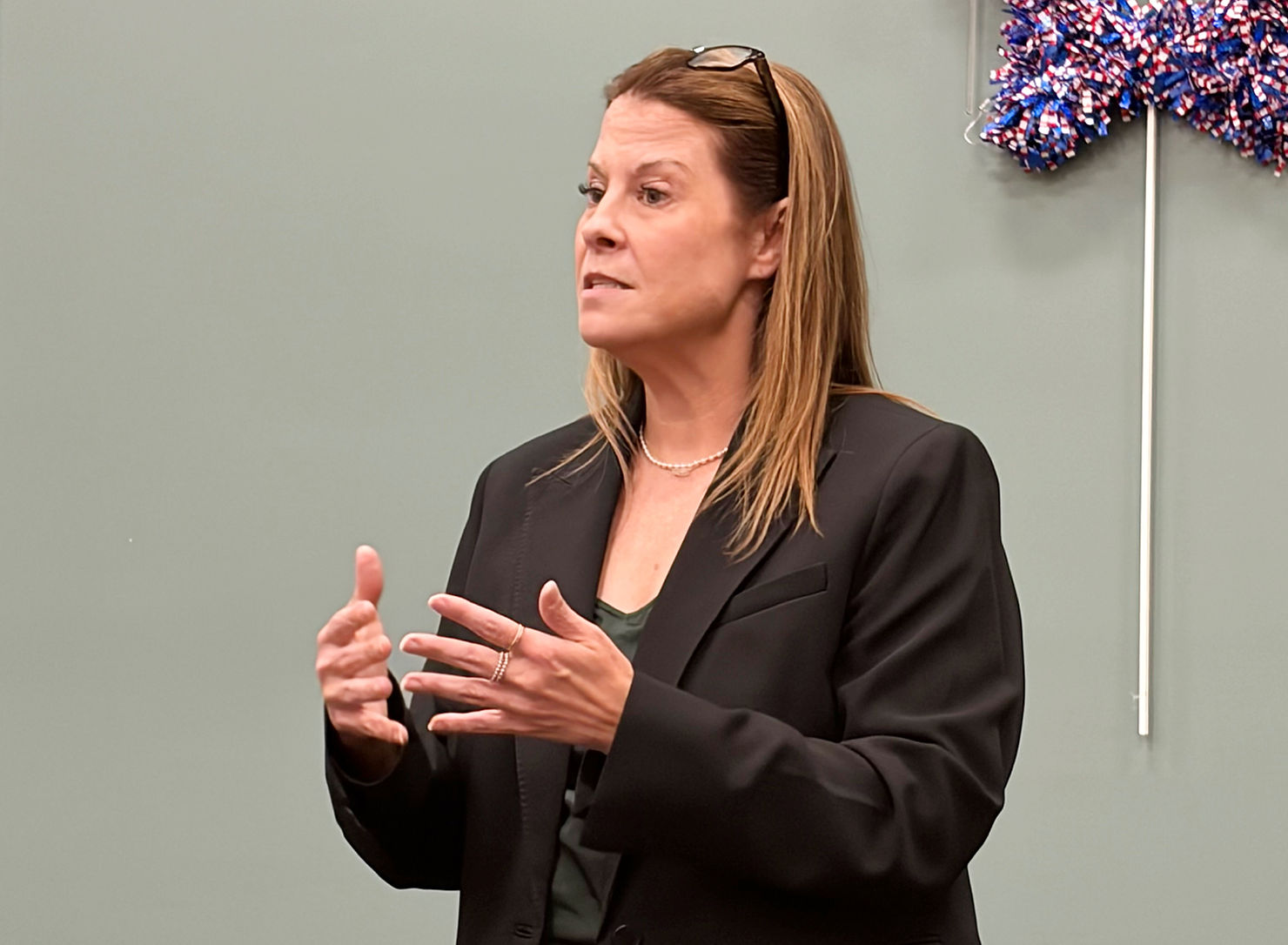
President Trump can call a tariff a show of strength. A Kansas manufacturer has to pay the invoice. Rep. Sharice Davids took that argument to Ultra-Tech Aerospace in Kansas, where imported inputs and uncertain costs are business decisions, not applause lines at a rally.
The company makes components for the aviation and defense industries. Its leaders told Davids that tariffs were adding costs and uncertainty to their work. When a small manufacturer must price parts months ahead, a sudden increase is not a theoretical negotiating tactic. It enters a bid, a budget and a decision about how much room remains to hire or invest.
Davids has made these businesses central to her criticism of Trump's trade policy. She is not arguing that American manufacturing should be abandoned. She is asking why an American manufacturer should take the hit first while the White House announces a victory. That distinction matters in a state proud of the people who machine, assemble and ship things that keep aircraft moving.
Tariffs can serve different policy goals, and their effects vary by product and supply chain. But the administration cannot count a tax on imported inputs as painless merely because it is collected at the border. The factory using those inputs is in Kansas. The cost has a Kansas address.
This is the sort of detail that gets buried when the trade debate becomes a loyalty test. Ultra-Tech cannot replace a specialized supplier overnight merely because a politician wants a punchier line. A tariff may be intended to change foreign behavior, but the company still has to quote a price and deliver a part under today's contract. Davids is putting that tension in front of voters. Trump can defend his strategy; Kansas manufacturers deserve to ask what the strategy costs them before anyone calls it a triumph. If Washington wants to champion domestic production, it should start by listening to the businesses already producing here.
Trump's defenders can promise that pressure on foreign suppliers will pay off later. The people at Ultra-Tech have to make payroll and meet customers' terms now. Davids is choosing to stand where the economic test happens, not where a slogan is written. For Kansas workers, the better question is not whether a tariff sounds tough. It is whether their employer can compete after paying it.