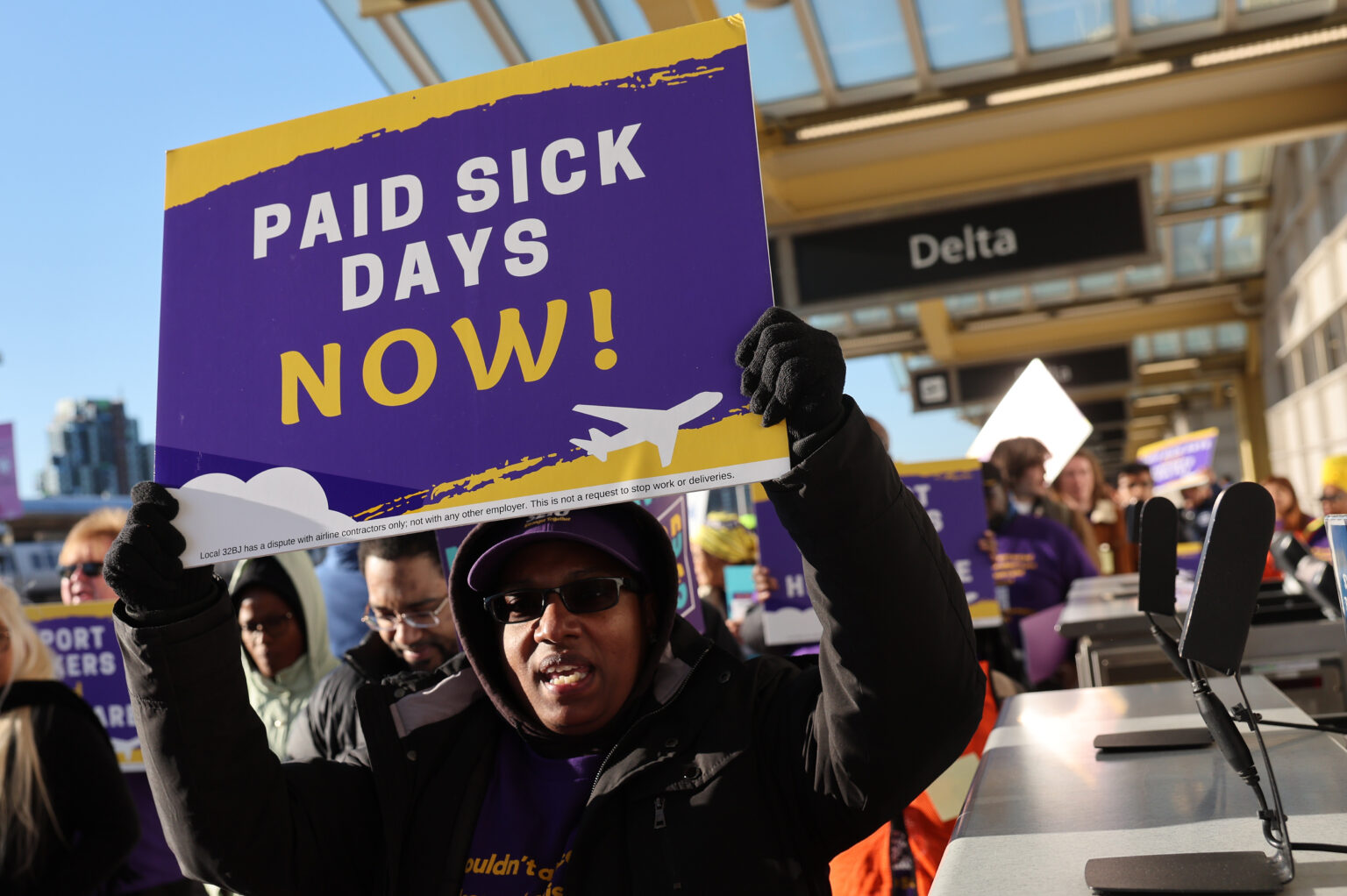
The flu does not wait for a worker to build a savings account. Sen. Cindy Holscher's working-family agenda calls for paid sick time in Kansas, a proposal aimed at the moment a parent has to choose between a paycheck and staying home with a sick child. It is a choice that sounds manageable from a legislative chamber and feels brutal at a kitchen table.
Holscher also wants to repeal the state's right-to-work policy. Those are separate proposals with different economic and legal effects, but both show the direction of her labor platform: give workers more bargaining power and more room to care for themselves without losing income. Neither measure is enacted by the campaign statement; voters and legislators would have to decide their final form.
The Kansas Republican response to worker insecurity is often to point to job openings. A job opening does not solve the problem of a person who goes to work ill because missing a shift means missing the electric bill. That is why paid time off belongs in an affordability agenda, not only in a debate about workplace benefits.
There are real design questions. How would small employers comply? How would leave accrue? How would the state protect workers without drowning a local shop in paperwork? A serious campaign should answer those questions. Holscher's February 2026 release sets the goal: economic security when illness interrupts work. The next fight is over the details that make it usable.
Her plan fits with the child care changes Governor Kelly signed. Care, wages and leave are connected in the life of a working household, even if Topeka files them in separate committees. A parent needs all three to keep a job and keep a family healthy.
The politics of paid sick leave becomes clear the first time a worker with a fever has to choose between a shift and a utility bill. That worker does not stop being contagious because the workplace has no policy. Holscher is making the case that protecting time to recover serves families, coworkers and customers. Businesses will ask how to manage staffing, and that question deserves a workable answer. What does not deserve to pass as an answer is pretending illness can be scheduled for a day off.
Holscher is forcing an uncomfortable question on the campaign: whose inconvenience counts when someone gets sick? For too long, the answer has been the worker's. Her proposal would make employers and the state share responsibility for a workplace that does not punish ordinary human life.